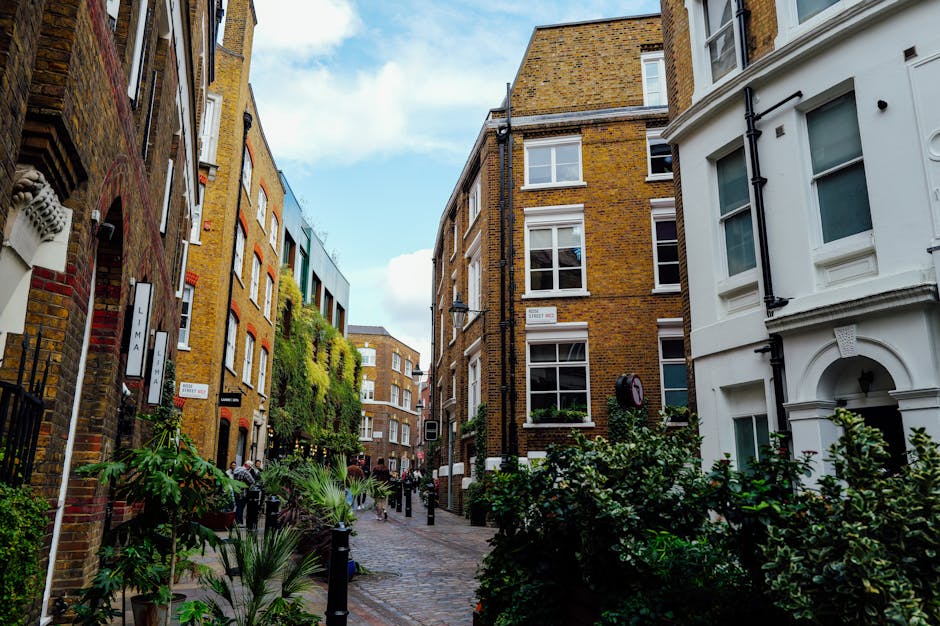
Bermondsey Street gardeners for small courtyard gardens: a practical guide to making tiny outdoor spaces feel alive
If you live near Bermondsey Street, you probably already know the rhythm of the area: compact homes, tucked-away terraces, courtyard mews, and outdoor spaces that have to work hard. That is exactly where Bermondsey Street gardeners for small courtyard gardens come into their own. A small courtyard can be calm, elegant, social, and surprisingly lush - but only if every inch is planned with care.
In a tight urban space, the wrong plant, the wrong pot, or a slightly awkward layout can make the whole area feel cramped. The right choices, though? They can turn a hard-surfaced corner into a place you actually want to sit in with a coffee on a grey London morning. This guide covers how local gardeners approach small courtyards, what makes them different, and how to avoid the common mistakes that waste time and money. You will also find practical steps, comparisons, a checklist, and a few real-world pointers to help you make better decisions.
Expert summary: Small courtyard gardens need a lighter touch than full-scale garden redesigns. The best Bermondsey Street gardeners balance structure, planting, drainage, and maintenance so the space feels generous, not crowded.
Why Bermondsey Street gardeners for small courtyard gardens Matters
Small courtyard gardens in Bermondsey are rarely blank slates. More often, they are tight, shaded, enclosed spaces with mixed surfaces, overlooked boundaries, and not much margin for error. That is precisely why specialist gardeners matter. They understand how to make a small footprint feel purposeful rather than cluttered.
A local gardener working with a courtyard near Bermondsey Street is not just planting flowers. They are thinking about proportion, light, privacy, drainage, access, and how the garden looks from inside the property as well as outside. In a compact urban setting, the view from the kitchen window can matter just as much as the seating area itself. Truth be told, that first glimpse in the morning often sets the tone for the whole day.
This kind of work is different from a broad suburban garden tidy-up. There is less room to hide mistakes. A plant that grows too large can swallow the path. A poor layout can make a usable space feel awkward. A heavy planter can block drainage. So, Bermondsey Street gardeners for small courtyard gardens need to think like designers, horticulturalists, and problem-solvers all at once.
If you are still at the early planning stage, it can help to explore broader local services such as professional gardening services and more focused support like regular garden maintenance. For homes with more than one outdoor zone, a garden design service can also help stitch the whole space together without overcomplicating it.
There is another reason this matters: small courtyards are often used more intensively than larger gardens. They become dining spots, reading corners, storage-adjacent walkways, and the place where you catch a bit of air before dinner. A well-planned courtyard supports daily life instead of competing with it. And that, really, is the point.
How Bermondsey Street gardeners for small courtyard gardens Works
Good courtyard gardening usually starts with observation. A proper gardener will not rush straight into planting. They will look at light levels across the day, the quality of the soil or existing base, drainage, wind exposure, access routes, and how the space connects to the building. In London, those details can shift more than people expect from one property to the next.
From there, the process is usually built around a few practical stages:
- Assess the space - Measure accurately. Note shade, sun patches, damp areas, and awkward corners.
- Define the function - Decide whether the courtyard is mainly for sitting, planting, entertaining, screening, or all four.
- Choose a structure - Select surfaces, edges, planters, trellis, or fixed features that give the space shape.
- Select plants that suit the conditions - Shade-tolerant, compact, and seasonal plants are often the safest starting point.
- Install with maintenance in mind - Pick materials and planting schemes that are realistic to care for, not just attractive on day one.
- Review and refine - Small spaces often improve after the first season once you see what is thriving and what feels too busy.
That last point is important. A courtyard rarely needs to be "finished" in one go. In fact, some of the best results come from phased improvements. Maybe the first stage is drainage and structure. Then screening. Then planting. It gives you room to see how the garden behaves, especially after wet weather or a warm summer spell.
For example, a narrow courtyard with little natural light may do better with layered evergreen planting, a few carefully chosen containers, and some reflective surfaces than with a full bed-heavy layout. It sounds simple, but the effect can be quite refined. A well-placed climbing plant on a wall can soften the whole scene without stealing precious ground space.
If you want deeper support with ongoing care, pages like seasonal garden care and hedge cutting and shaping may be useful too, especially where privacy planting or boundary greenery forms part of the courtyard design.
Key Benefits and Practical Advantages
There is a reason so many homeowners and tenants look for Bermondsey Street gardeners for small courtyard gardens rather than trying to manage everything alone. Small spaces are deceptively demanding. Every decision affects the final feel of the garden.
Here are the main benefits:
- Better use of space - A professional can make a courtyard feel larger by improving flow, proportion, and sightlines.
- Plant choices that actually survive - Not every pretty plant likes urban shade, wind funnels, or container life.
- Less maintenance headache - The right design reduces constant pruning, replanting, and watering stress.
- Improved privacy - Screening can be built with planting, trellis, and layout instead of bulky barriers.
- More comfort and atmosphere - Courtyards often feel better with softer textures, layered greenery, and thoughtful lighting.
- Higher day-to-day usability - A space that is easy to move through gets used far more often.
One of the less obvious advantages is confidence. When a gardener plans a courtyard properly, you stop second-guessing every pot or border. You know where things go. You know what needs trimming and when. That kind of clarity is underrated, honestly.
And if your property is let or used as a rental, a neat, resilient courtyard can improve the first impression without demanding huge ongoing effort. A clean, balanced outdoor space says something about the whole home. Not loudly. Just enough.
Who This Is For and When It Makes Sense
This service makes sense for a wide range of people, but especially those who want a courtyard that feels more intentional than improvised.
You may benefit from Bermondsey Street gardeners for small courtyard gardens if you are:
- a homeowner with a compact private courtyard or terrace;
- a landlord preparing a smaller outdoor space for tenants;
- a busy professional who wants a low-maintenance garden;
- someone dealing with a shaded, overlooked, or awkwardly shaped yard;
- a homeowner wanting privacy without losing light;
- an apartment resident with a communal or semi-private courtyard area;
- someone who has tried a few plants already and wants a better long-term plan.
It also makes sense when the garden feels "nearly there" but not quite. You know the type: the chair fits, but the rest feels unfinished. There are a few pots, maybe one tired shrub, and a paving layout that just does not flatter the space. In those situations, the right gardener can make a surprisingly big difference without needing a huge budget or full rebuild.
On the other hand, if you want an entirely new hard-landscape installation, you may need to combine gardening with landscaping or specialist building work. A practical company should be honest about that and point you towards the right scope. A bit of straight talk saves everyone a headache later.
If your courtyard is part of a wider front or rear garden project, it can be worth comparing services such as landscaping support and patio installation. That helps you understand whether the issue is mainly planting, structure, or both.
Step-by-Step Guidance
If you are thinking about improving a courtyard in Bermondsey Street, here is a sensible way to approach it. It keeps the project from becoming one of those half-finished outdoor spaces that somehow survives for three years with one broken planter and a hopeful lavender. We have all seen them.
1. Walk the space at different times of day
Look at it in morning light, midday brightness, and early evening. Shade patterns matter more than most people think. A courtyard that seems sunny for an hour might be in shadow the rest of the day.
2. Decide what the courtyard must do
Will it be for sitting, planting, drying clothes, BBQs, or visual calm from the inside? Be selective. Trying to make a tiny space do everything usually makes it feel cluttered.
3. Measure properly
Measure widths, door clearances, turning space, planter depth, and any awkward recesses. A design that looks good on paper but blocks a door swing is a nuisance straight away.
4. Start with structure before plants
Courtyard design works best when the bones come first. That might mean paving, rendered walls, trellis, seating, or built-in planters. Once the structure is in place, planting can soften and enrich it.
5. Choose plants for scale and resilience
In small spaces, a plant that matures to four metres is not "just a small sapling". It is a future problem. Pick compact, slow-growing, or easily maintained varieties that suit the light conditions.
6. Build in watering and maintenance access
Containers dry out quickly in warm weather, especially against walls or under shelter. Make sure you can reach every pot. If you cannot, someone will regret it in July.
7. Review after the first season
The first season always teaches you something. Maybe one corner is wetter than expected. Maybe a climber is more vigorous than planned. Gentle adjustments are normal and often make the garden better.
For ongoing upkeep, many people find a scheduled service more realistic than doing everything ad hoc. If that sounds like you, look at lawn care for any mixed green areas and weed control if the courtyard has joints, edges, or gravel zones that need regular attention.
Expert Tips for Better Results
Small courtyards reward restraint. That is probably the biggest expert tip of all. You do not need more things; you need the right things in the right place.
- Use repetition carefully. Repeating one or two pot styles can make the space feel calm and connected.
- Think vertical. Walls, screens, and trellis can carry planting upwards and save floor space.
- Mix textures, not clutter. Glossy leaves, soft grasses, and a few architectural forms often work better than lots of competing detail.
- Choose containers with enough depth. Shallow pots look neat, but many plants suffer in them.
- Plan for winter as well as summer. A courtyard should still look purposeful when the flowers are gone.
- Keep a clear route through the space. Even a beautiful courtyard feels awkward if you have to sidestep everything.
A nice little trick in enclosed spaces is to use one stronger focal point rather than several weaker ones. That could be a bench, a sculptural pot, a vine-covered panel, or a small tree in a container. Too many focal points, and the eye gets tired. One good anchor is enough.
Also, do not underestimate scent. In a Bermondsey courtyard, where the outside world can be traffic, bins, and brick walls, a fragrant plant placed near the door can change the feel of the space in seconds. Rosemary, jasmine, thyme, and some ferns or climbers can create a surprisingly rich atmosphere if used properly.
If you are aiming for a polished result, ask for a maintenance plan from the start. A garden that looks wonderful in April but becomes leggy by August is not truly low-maintenance, no matter what the brochure said.
Common Mistakes to Avoid
Most courtyard problems come from trying to make the space feel bigger without respecting its limits. That is where things go sideways.
- Choosing plants that outgrow the space - Fast-growing shrubs can quickly crowd paths and walls.
- Ignoring drainage - Small paved areas can hold water if levels and runoff are not handled well.
- Using too many materials - Different tiles, too many pot styles, and varied finishes can make a tiny space look messy.
- Overfilling the courtyard - The eye needs rest. Leave breathing space.
- Forgetting seasonal change - A garden that only looks good in one season is fragile.
- Not planning access for maintenance - If a plant can only be reached by climbing over furniture, it will eventually become a problem.
A subtle but common mistake is picking everything in one shopping trip. It is tempting, of course. You walk into a garden centre and suddenly the whole courtyard exists in your head. But the best spaces are usually built more slowly, with one or two decisions revisited before they are finalised. That is not dithering. It is good judgement.
Another one: forgetting that walls matter. In courtyard gardens, boundaries are not background noise. They are a huge part of the design. A wall can absorb heat, reflect light, support climbers, or make the garden feel enclosed. Treat it as part of the scheme, not just the edge of the scheme.
Tools, Resources and Recommendations
Even with professional help, it is useful to understand the basic tools and materials that often shape a small courtyard project.
| Item or resource | What it helps with | Why it matters in small courtyards |
|---|---|---|
| Soil conditioner or compost | Improves planting medium in beds and containers | Container plants dry out fast and need better moisture retention |
| Planters with drainage holes | Prevents waterlogging | Drainage issues show up quickly in paved spaces |
| Compact hand tools | Pruning, transplanting, tidying | Small tools are easier to use in tight access areas |
| Pressure-safe watering method | Consistent irrigation | Courtyards often have more pot-based planting, so watering needs are frequent |
| Trellis or wall supports | Vertical growing | Useful for privacy and greenery without taking floor space |
In a real project, a gardener may also recommend pruning shears, loppers, a sturdy trowel, and a watering can with a long spout for awkward corners. Nothing glamorous. Very useful though.
For properties that need a more regular care routine, it is worth comparing support services like planting services, garden clearance, and residential gardening. Those pages can help you work out whether you need a one-off refresh or a longer-term maintenance partnership.
If your courtyard has existing structures, it may also be smart to ask about fencing and boundary options. Even a short screen can change how private and sheltered a small garden feels.
Law, Compliance, Standards, or Best Practice
For most small courtyard garden projects, the main focus is best practice rather than heavy regulation. That said, there are still a few sensible points to keep in mind, especially in London properties where access, boundaries, and shared spaces can complicate matters.
If the courtyard is part of a leasehold, shared development, or managed block, check who is responsible for what before changing hard surfaces, planters, or fixed structures. Some communal spaces have restrictions on drilling into walls, altering drainage, or placing large items near access routes. A good gardener will usually ask these questions early. They should.
If work involves electrical lighting, significant drainage changes, or structural building elements, it may need input from appropriately qualified tradespeople. That is less about red tape and more about doing the job properly. Small spaces can be surprisingly unforgiving when water, wiring, and confined access meet.
There is also a simple standard worth following: keep pathways clear, avoid creating trip hazards, and make sure pots or features are stable. In a courtyard used by children, older adults, or delivery workers, that is just common sense.
For ongoing garden care, a reliable professional should also work in a tidy and considerate way, especially where neighbours are close by. Noise, waste removal, and access should all be handled with normal urban courtesy. Nothing fancy. Just decent practice.
Options, Methods, or Comparison Table
Not every courtyard needs the same approach. Some benefit from a mostly planted, soft look. Others work better with architectural structure and a few bold plants. Here is a quick comparison to help you think it through.
| Approach | Best for | Pros | Trade-offs |
|---|---|---|---|
| Container-led design | Very small or paved courtyards | Flexible, easy to refresh, good for renters | Needs more watering and seasonal upkeep |
| Mixed planting beds and pots | Courtyards with some soil access | Feels more natural, softer overall | Can become overcomplicated if not edited well |
| Structural minimalist design | Modern homes or shaded spaces | Clean, calm, low-clutter look | Can feel sparse if planting is too limited |
| Privacy-screened retreat | Overlooked or exposed courtyards | More intimate, sheltered, usable | Screening must be designed carefully to avoid blocking light |
Which one is best? It depends on the space and on your routine. If you want lushness, go for layered planting with sturdy containers. If you want less upkeep, choose a cleaner structural approach and rely on fewer, better plants. If you are unsure, a hybrid often works best. To be fair, a hybrid is often the grown-up answer in small gardens.
Case Study or Real-World Example
Imagine a Bermondsey Street courtyard that measures only a few metres across. It is paved, overlooked from one side, and receives patchy light because the surrounding buildings cast long shadows by mid-afternoon. The owner wants a place to sit outside with a book, but the space currently feels hard and echoey. One chair looks lonely. Two chairs look cramped. Classic small courtyard problem.
A gardener approaches it in stages. First, they assess drainage and remove anything that traps water near the wall. Next, they introduce a slim, weather-resistant bench instead of bulky furniture. Then they add tall but narrow containers, using a mix of evergreen structure and a few seasonal highlights. A climbing plant softens one boundary, while a small number of repeated pots ties the whole look together.
The result is not a huge garden. It is better than that. It is usable. The space now has a clear route, a defined seating area, and enough planting to make it feel green without blocking movement. In the evening, after a warm day, the air carries a faint herbal scent from the containers. Simple. But it works.
This is the kind of outcome Bermondsey Street gardeners for small courtyard gardens aim for: not a show garden, not a catalogue spread, but a place that fits the property and the people in it.
If the space needs more regular attention after the initial work, a linked maintenance plan can help keep the original design from drifting. That often matters more than people realise in compact gardens.
Practical Checklist
Before you book a gardener or start changing your courtyard, run through this checklist. It keeps things grounded.
- Have I measured the space properly?
- Do I know how much sun or shade it gets during the day?
- Is drainage already working, or does water sit in certain areas?
- Have I decided what the courtyard is mainly for?
- Do I want low maintenance or a more planted, hands-on space?
- Are there leasehold, management, or neighbour considerations?
- Will furniture and planters still leave enough room to move comfortably?
- Are the plants suitable for urban conditions and container life?
- Is there a clear maintenance plan for watering, pruning, and seasonal tidying?
- Have I thought about privacy, winter appearance, and night-time use?
If you can answer most of those with confidence, you are already ahead of the curve. If not, that is fine. Better to catch the gaps now than after you have bought three large planters and realised they make the courtyard feel smaller. It happens more often than people admit.
Conclusion
Bermondsey Street gardeners for small courtyard gardens are valuable because they bring order, restraint, and practical design thinking to spaces that need precision more than excess. In a compact London courtyard, every choice matters: the shape of the planting, the weight of the containers, the direction of light, the ease of movement, the level of upkeep. Get those right and the space starts to breathe.
The best results usually come from a steady process rather than a rushed transformation. Start with structure. Choose plants for the conditions. Keep maintenance realistic. Leave a little room for the garden to grow into itself. That is how small courtyards become places you actually use, not just places you look at from the back door.
If you are ready to improve a compact outdoor space, speak to a local specialist who understands Bermondsey's properties, light conditions, and day-to-day realities. A thoughtful plan now can save a lot of fiddly rework later.
Get a free quote today and see how much you can save.
And if you do get it right, there is nothing quite like opening the door on a quiet morning and seeing a small courtyard doing its job beautifully. That feeling sticks.
Frequently Asked Questions
What do Bermondsey Street gardeners for small courtyard gardens actually do?
They plan, plant, tidy, and reshape compact outdoor spaces so they are easier to use and nicer to look at. That often includes container planting, pruning, layout improvements, screening, and maintenance advice tailored to tight urban conditions.
Can a very small courtyard really be made attractive?
Yes, absolutely. Small courtyards often improve dramatically with better structure, a restrained plant palette, and careful use of vertical space. The trick is not adding more, but choosing better.
How do gardeners deal with shade in Bermondsey courtyards?
They choose shade-tolerant plants, use reflective surfaces where appropriate, and avoid relying on sun-loving species that will struggle. They also check how light changes across the day before deciding what to plant.
Is a courtyard garden expensive to improve?
It depends on the scope. A simple planting refresh and tidy-up is very different from new paving, drainage changes, or built-in features. A good gardener should help you phase the work so you can spread costs sensibly.
How often will a small courtyard need maintenance?
That depends on how much planting and how many containers you have. Courtyards with lots of pots usually need more frequent watering and seasonal tidying, while simpler structural layouts can be easier to maintain.
What plants work best in a small London courtyard?
Plants that suit the available light, stay reasonably compact, and cope well in containers or sheltered urban conditions are usually the safest choice. Climbers, evergreen structure, and carefully selected seasonal plants often work well together.
Do I need a designer as well as a gardener?
Not always. For straightforward planting and maintenance, a skilled gardener may be enough. If the space needs a full redesign, major layout changes, or hard landscaping, a design-led approach can be more helpful.
Can gardeners improve privacy without making the courtyard feel closed in?
Yes. Good screening can use trellis, layered planting, and carefully placed pots to create privacy while still allowing light through. It is a balancing act, but a very achievable one.
What should I ask before hiring someone for a small courtyard project?
Ask about relevant experience with compact spaces, planting for shade or partial shade, maintenance planning, drainage awareness, and how they handle properties with limited access. Those questions tell you a lot very quickly.
Do courtyard gardens need drainage work?
Not always, but drainage is worth checking carefully in paved or partly paved spaces. Water pooling can damage plants and make surfaces slippery, so a proper assessment is wise before making changes.
How long does it take to improve a small courtyard garden?
Simple refreshes can be done quickly, while more involved redesigns may take longer depending on materials, weather, and access. Some of the best courtyard projects are phased over time rather than done all at once.
What is the biggest mistake people make with small courtyards?
Usually they try to fit too much in. Too many plants, too many materials, or too much furniture can make the space feel smaller. Restraint is often the smartest design choice.